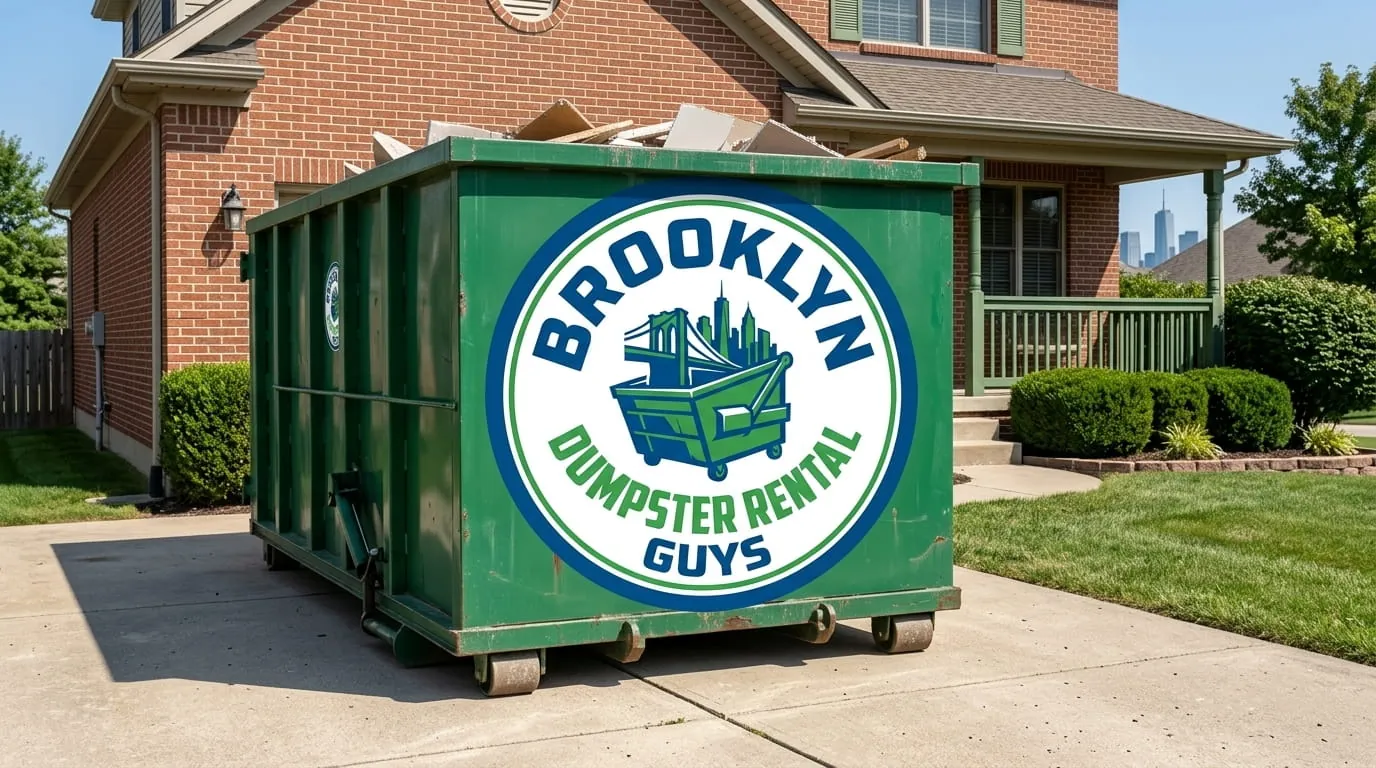
Every gut renovation in Brooklyn ends the same way: a mountain of debris that has to leave the site legally, on schedule, and without blowing your disposal budget. Whether you are stripping plaster and lath out of a Bed-Stuy brownstone, tearing off a Park Slope roof, or demoing a kitchen in Bushwick, construction and demolition (C&D) waste is one of the most heavily regulated and expensive parts of the job. Handle it wrong and you face overweight charges, rejected loads at the transfer station, or violations from the Department of Sanitation. Handle it right and disposal becomes a predictable line item you can price with confidence.
This guide is written for the people actually running the work: general contractors, remodelers, and demo crews doing old-building work in Kings County. It covers what counts as C&D waste, why heavy inert material needs its own container, how weight limits actually work, what recycles at NYC transfer stations, and the DSNY and New York State DEC rules that keep you compliant.
Know Your C&D Waste Streams Before the First Swing
Construction and demolition debris is not one material. It is a dozen different streams with different weights, different recycling paths, and different disposal rules. Sorting them in your head before demo starts is what separates a clean job from a chaotic one.
Lightweight bulk debris
- Drywall and sheetrock - high volume, moderate weight. A single kitchen gut can fill a third of a container with gypsum board alone. It compacts poorly and takes up space fast.
- Lumber and dimensional wood - old floor joists, studs, subfloor, trim. Clean wood is one of the easiest streams to divert to recycling.
- Roofing - asphalt shingles, felt, and tear-off are surprisingly heavy for their volume. A full roof strip on a three-story Brooklyn rowhouse can add thousands of pounds fast.
Heavy inert debris
- Plaster and lath - the signature waste of a pre-war brownstone gut. Horsehair plaster is dense and heavy, and the wood lath behind it is often coated in decades of paint. This is where crews consistently underestimate weight.
- Brick and masonry - from chimney removals, party-wall repairs, and interior demo. Extremely dense.
- Concrete - slab, footings, sidewalk, and cellar floors. The heaviest common material on any site.
- Tile, dirt, and fill - bathroom demo, excavation spoils, and cellar dig-outs. Inert, heavy, and often mixed with mortar.
The single most important mental split is between lightweight bulk and heavy inert material. That distinction drives everything else - container choice, weight limits, cost, and where the load can legally go.
Why Concrete, Brick, and Dirt Need a Dedicated Bin
New Brooklyn contractors make the same expensive mistake: they order one big container and throw everything in it. Then the truck can't lift it, or the transfer station rejects the load, or the overweight surcharge doubles the bill.
Heavy inert debris - concrete, brick, block, dirt, tile, and plaster - weighs so much that a relatively small volume can max out a container's weight rating long before it looks full. A 30-yard roll-off might handle a whole house of mixed light debris, but fill that same container with concrete and you would exceed legal road weight limits at a fraction of its capacity. Trucks are governed by axle and gross-vehicle-weight laws; a bin that is too heavy simply cannot be hauled.
The solution is a dedicated heavy-debris container, usually a low-profile 10 or 20-yard bin rated for dense material. Keeping concrete and masonry separate does three things: it keeps every load haulable, it lets that clean inert stream go to a recycler that turns it into aggregate rather than to a landfill, and it keeps your cost predictable. Mixing a few hundred pounds of concrete into a light-debris bin can push it overweight; a dedicated bin priced by the ton removes the guesswork. If your job includes significant slab, masonry, or excavation work, plan a separate heavy debris container from day one rather than discovering the problem when the truck arrives.
Weight Limits: The Number That Actually Controls Your Bill
Every roll-off container comes with two limits: a volume limit (how many cubic yards it holds) and a weight limit (how many tons you can put in before surcharges kick in). On light debris you hit the volume limit first. On brownstone demo, plaster, and masonry you hit the weight limit first - often when the bin looks only half full.
A typical arrangement includes a tonnage allowance built into the base rental price, with an overage rate per ton beyond that. Knowing your material helps you predict which limit you'll hit:
| Debris type | Bulk vs weight | Best container approach |
|---|---|---|
| Drywall, wood, mixed light C&D | Volume-limited | 20 or 30-yard standard roll-off |
| Roofing tear-off | Weight-limited | 20-yard, watch tonnage |
| Plaster & lath | Weight-limited | Smaller bin or dedicated heavy bin |
| Concrete, brick, dirt, tile | Strictly weight-limited | Dedicated 10-20 yard heavy-debris bin |
For most mixed-debris Brooklyn renovations, a 20-yard dumpster is the workhorse, while larger whole-house gut jobs and roofing projects often move up to a 30-yard dumpster for the extra volume. The rule of thumb: size up for volume, size down for weight. When in doubt on a plaster-heavy or masonry-heavy job, two smaller loads beat one overweight bin you can't legally move.
What Recycles at NYC C&D Transfer Stations
New York City has a real C&D recycling infrastructure, and using it lowers your disposal cost while keeping material out of landfills. Licensed C&D transfer stations across the five boroughs accept construction debris and sort recoverable streams. The materials most readily recovered include:
- Clean concrete, brick, and block - crushed into recycled aggregate and road base. This is why a clean, source-separated heavy bin is cheaper to dispose of than mixed debris.
- Clean wood and lumber - reused, chipped into mulch, or turned into biomass fuel. Painted or treated wood from old buildings is often handled differently, so keep clean framing separate when you can.
- Metal - rebar, ductwork, copper, pipe, and appliances have scrap value and should never go in a mixed bin if you can pull them.
- Cardboard and clean packaging from new materials.
- Asphalt roofing shingles - recyclable at certain facilities into road paving material.
The more you source-separate on site, the more you divert and the less you pay in mixed-debris tipping fees. Even a rough separation - one bin for clean heavy inert, one for mixed light C&D, and a scrap pile for metal - meaningfully improves your diversion rate. For a full breakdown of what belongs in each container, see our guide on what can go in a dumpster.
Container Logistics on Tight Brooklyn Blocks
Placing a roll-off on a narrow one-way street lined with parked cars and stoops is its own skill. A few things every Brooklyn GC should plan for:
- Street placement permits - if the container sits on the roadway rather than on private property, you need proper placement authorization. A licensed local hauler handles this as part of the service and knows the block-by-block realities.
- Access and swing room - the truck needs clearance to drop and retrieve the bin. Coordinate with neighbors and, where required, temporary no-parking so the delivery isn't blocked.
- Right-sizing for the space - on a cramped block, a 20-yard bin that gets swapped twice may be far more practical than a 30-yard that can't be positioned safely.
- Swap-out scheduling - for a multi-week gut, schedule hauls to match your demo phases so a full bin never stalls the crew. Coordinating this up front with your hauler keeps the job moving.
Because Brooklyn placement rules and street conditions are so specific, working with a hauler who runs these blocks daily saves real time. Our roll-off rental service and dedicated construction dumpster rentals are built around exactly these constraints.
Diversion and LEED Basics
If your project is chasing LEED certification or any green-building target, C&D waste diversion is a scored credit. The metric is simple in concept: the percentage of total debris (by weight or volume) that you divert from landfill through recycling and reuse. To earn it you need documentation - weight tickets from the transfer station showing how much material went to recycling versus disposal.
Practically, that means two things on a LEED job. First, source-separate aggressively so recoverable streams stay clean and countable. Second, use a hauler and transfer station that provide itemized weight tickets and diversion reports. Even on non-LEED jobs, keeping those tickets is smart - they document your compliance and give you real numbers to price future work.
Staying Compliant: DSNY and NY State DEC Rules
This is where contractors get into real trouble, because C&D disposal in New York is legally distinct from household trash. A few non-negotiables:
Use a licensed carter
In New York City, commercial and construction waste must be hauled by a carter licensed by the Business Integrity Commission (BIC). You cannot legally throw construction debris in the residential curbside stream, and you cannot use an unlicensed hauler. Using a properly licensed C&D hauler is the single most important compliance step - it's what keeps the debris moving through legitimate, permitted transfer stations.
Keep your C&D manifests and weight tickets
Legitimate disposal generates a paper trail. Weight tickets and manifests document what left your site, where it went, and how much it weighed. Keep these on file. They prove the material was disposed of legally, they support LEED diversion claims, and they protect you if there's ever a question about illegal dumping in your project's name.
Follow NY State DEC handling rules
The New York State Department of Environmental Conservation (DEC) regulates how C&D debris is transported and where it can be processed and disposed. Clean fill, mixed C&D, and regulated materials each have their own handling requirements. And note the big exception: asbestos, lead, and other hazardous materials are not ordinary C&D waste. Old Brooklyn buildings frequently contain asbestos in pipe insulation, floor tile, and plaster, and lead paint on lath and trim. These require licensed abatement and specialized disposal - never in a standard debris container. When in doubt on an old building, test before you demo.
For full-scale tear-outs and structural demo, coordinating disposal with a crew that handles the debris side end to end simplifies compliance. See our demolition debris removal service for how that works.
Putting It Together on a Brownstone Gut
Here's the workflow that keeps a typical Brooklyn brownstone renovation clean and compliant. Before demo, walk the scope and estimate your streams: how much plaster and lath, how much clean wood, how much masonry or concrete, and whether abatement is needed. Order a mixed light-debris roll-off for the bulk gut, and a separate dedicated heavy bin if plaster volume or masonry demo warrants it. Source-separate metal for scrap and keep clean wood recoverable where you can. Schedule swap-outs to match your demo phases. And keep every weight ticket and manifest from your licensed carter.
Do that and disposal stops being the chaotic, over-budget end of the job and becomes a controlled, predictable process - one that keeps you compliant with DSNY and DEC, maximizes what you divert, and keeps your crew productive.
Get the Right Containers on Your Job
Every Brooklyn job is different, and the right container plan depends on your debris mix, your block, and your schedule. If you're planning a gut reno, roof tear-off, or demo project and want disposal handled by a hauler who knows Kings County, talk it through with us. Explore our full range of services or contact our team to size your containers and lock in a plan. Call (929) 552-9998 to get your construction debris handled right the first time.

Owner, Brooklyn Dumpster Rental Guys — sharing straight advice from years of local hauling across Brooklyn and Kings County.
Frequently Asked Questions
Can I put concrete and plaster in the same dumpster as drywall and wood?
You shouldn't. Concrete, brick, plaster, and dirt are heavy inert debris that will max out a container's weight limit long before it's full, making the load too heavy to legally haul and driving up overage charges. Keep heavy inert material in a dedicated heavy-debris bin - usually a low-profile 10 to 20-yard container rated for dense material - and use a standard roll-off for lighter mixed C&D like drywall and wood. Separating them also lets the clean inert stream go to a recycler rather than a landfill.
Do I need a permit to place a construction dumpster on the street in Brooklyn?
If the container sits on the roadway rather than on your own private property, yes - you need proper street placement authorization, and on many blocks temporary no-parking arrangements too. A licensed local hauler that runs Brooklyn blocks daily typically handles the placement logistics and permitting as part of the service, which is far easier than sorting it out yourself on a tight one-way street.
What construction debris actually gets recycled at NYC transfer stations?
Licensed NYC C&D transfer stations recover clean concrete, brick, and block (crushed into recycled aggregate), clean wood and lumber, metal like rebar and pipe, cardboard, and in some cases asphalt roofing shingles. The cleaner and more source-separated your material is, the more gets diverted and the lower your tipping fees. Rough on-site separation - one bin for clean heavy inert, one for mixed light C&D, and a scrap pile for metal - meaningfully improves your diversion rate.
Who is legally allowed to haul construction debris in New York City?
Construction and demolition debris must be hauled by a carter licensed by the Business Integrity Commission (BIC) and processed through permitted transfer stations under NY State DEC rules. You cannot put C&D waste in the residential curbside stream or use an unlicensed hauler. Always keep the weight tickets and manifests your carter provides - they document legal disposal, support LEED diversion claims, and protect you against illegal-dumping liability.
How do I handle asbestos or lead paint found during a brownstone demo?
Asbestos and lead are not ordinary construction debris and must never go in a standard dumpster. Old Brooklyn buildings frequently contain asbestos in pipe insulation, floor tile, and plaster, and lead paint on lath and trim. These require licensed abatement and specialized, regulated disposal. When working on any older building, test suspect materials before demolition begins - handling them as regular C&D waste is both illegal and a serious health hazard.